Showing posts with label Presuppositional Apologetics. Show all posts

Sunday, April 30, 2017

Criticisms of Clark


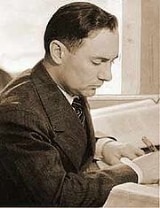
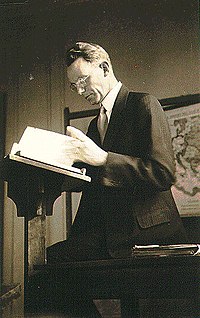
Why not follow Gordon Clark or Cornelius Van Til's apologetic methodology? I think they both had strengths and weaknesses. Robert Reymond constructed a synthesis of their strengths. Dr. Reymond's book is available for free entitled "The Justification of Knowledge".


Criticisms of Dr. Clark's Philosophy 


(1) Arbitrary Axiom 
(1)* Scripturalism is self-refuting (e.g. AquaScum)
(2) Robust Thomistic divine simplicity with its inherent denial of the Trinity.
(3) Denial of the free offer of the gospel.
(4) Voluntarism 
(5) Eternal generation of the Son from the Father. The Son, Jesus, and the Holy Spirit eternally derived/proceed from the Father as the original source. This derivation is conditioned upon the Father's decree. 
(6) Necessitarianism with its entailed dependence upon creation
(7) Continuous creation with its denial of personal identity through time
(8)Unlivability. Basic knowledge (e.g. non-propositional knowledge of self) cannot be known only asserted as mere opinion.
(9) The three Persons of the Trinity are merely instances of a genus, namely, God. Hence, a Quadrinity.
(10) The obscurity of Clark's epistemology. Clark demands a definition of sensations from empiricists but does not explain precisely how humans come to know propositions via divine illumination through recollection/reminiscence. 
(11) Incompatibilism (Hard Determinism)
(12) Saving faith is merely understanding and assent
(13) The Son within the incarnation there possessed two distinct natures with two minds. This sounds awfully close to Nestorianism without the proper nuances (e.g. Thomas Morris).
(14) Primacy of the intellect
(15) Occassionalism
(16) Univocal knowledge of God
(17) Denial of theological paradoxes
(18) Supralapsarianism

Thursday, November 20, 2014

A Denied Christian Newspaper Article

I submitted an article for the local Christian Newspaper Ministry with the hopes that it would be a featured article. Surprisingly, the editor rejected my submission on the basis that it didn't reach the targeted audience and was too overly academic; the editor said something to the extent that "the article would make a great theology paper." You be the judge if I am too overly academic or simply biblical.    


Biblical Apologetics

           As the advocates of the New Atheism rant in books that sweep the American popular culture, what are Christians doing to counter act this movement? In the first epistle of Peter, the Apostle Peter encourages Christians scattered in Asia Minor to endure suffering and persecution.  In chapter three, he, then instructs Christians to “ sanctify Christ as Lord in your hearts, always [being] ready to make a defense to everyone who asks you to give an account for the hope that is in you, yet with gentleness and reverence; and keep a good conscience so that in the thing in which you are slandered, those who revile your good behavior in Christ will be put to shame (1 Peter 3:15-16, NASB). Christians are commanded here, by God, to set Christ apart as Lord over their hearts, and to be prepared always to rationally defend the Christian faith in gentleness, humility and respect. Our defense, behavior, and lifestyle should consistently honor Christ as Lord to put the nonbelievers’ false accusations to shame.

These verses tell us our starting point in defending the faith must honor Christ as Lord. We cannot talk with nonbelievers in a way that dishonors Jesus. So our approach must transparently honor Christ as Lord and Savior. We cannot be closet Christians in our arguments and lifestyles. We either defend the Christian faith or betray it. We either defend the Triune God of the Bible or we defend idols of the heart. As our Lord Jesus plainly said, “He who is not with Me is against Me…”(Matthew 12:30). Many Christians today are attempting to be faithful to Jesus by defending the Christian faith. But the problem is they are defending the faith at the cost of denying Christ as Lord. They are telling nonbelievers to judge God and the Bible by limited human reason. They have implicitly consented in arguments, God is on trial and, the nonbelievers are the judges and jury. Christians argue as though nonbelievers have the right to count up the evidences in favor of Christianity and then judge if it’s true. However the biblical teaching contradicts this. God alone intrinsically is the judge and jury, while the nonbelievers are on trial, regardless of their desperate attempts to hijack God’s judgment seat. The Bible tells us God is not to be tested (Luke 4:12). God is the source and standard of truth (John 17:17, Det 32:4, John 16:13). Yet such passages are read with no affect. Christians continue to argue for a generic theism or a probable God; but they do not argue for the certain Christian God.

With the above criticisms made, we must move to construct then, a biblical approach to defend the Christian faith against the New Atheism. There are at least two fundamental principles that should set boundaries to the arguments we give to nonbelievers. The first is the no-neutrality principle that states Christians should not be neutral in word, thought, and deed, (including any argument) in commitment to the truthfulness of Christianity. Implicitly, this means Christians will not pretend Christianity is false with nonbelievers and then seek to prove Christianity from pretended disbelief to belief. The second principle, the no-autonomy principle, flows from the commitment to the truth of Christianity. It articulates, and reserves, the right to judge truth claims solely to God. Only God and His Word are our ultimate authority and standard for every facet of life. This runs counter to the idea man is autonomous, and, in turn, is the standard of all things. We are to transparently presuppose, proclaim, and argue from the necessity and authority of God’s revelation in Scripture and nature. 

Ideally, then, every argument we make to defend the Christian faith in some way should conform to these principles. If we stick to these biblical principles then we will effectively practice apologetics to the glory of God. 

Tips for Apologetics

1.     Study: Study and memorize the Bible, Systematic Theology, Evangelism and Apologetics to know what you believe, so you can Biblically preach and defend it. Apologetics presupposes Theology, and Evangelism. One cannot properly engage in Biblical Apologetics without engaging in Biblical Theology with the goal of Evangelism.

2.     Prayer: In apologetics one’s defense is only as good as one’s offense. So both study and prayer must be properly indulged in first before engaging in apologetics with the unregenerate. Remember all men have a sufficient knowledge of God but suppress the truth in unrighteousness (Romans 1:18). Only God can open the nonbeliever’s eyes so we ought to pray God would do so in our apologetic encounters. Apologetics can only show the foolishness of rejecting the gospel. But God can make the gospel and our defense effective.

3.     Respect: Respect the unregenerate as made in the image of God. Don’t assume you know what the nonbeliever believes even if he associates himself with a particular religion. Let the unbeliever articulate his views and arguments. When refuting the unbeliever always refute and articulate the nonbeliever’s position accurately. Further, always refute the strongest argument the unbeliever can make in favor of his position.

4.     Wisdom: When dealing with the unbeliever’s arguments against or from the Bible always read the scriptures in context and look up the original Hebrew or Greek meaning. Since often times the unbeliever takes scriptures out of context or twists the original meaning of any given passage.  Moreover, we should anticipate the unbeliever’s objections and arguments.

5.     Fellowship: Talk among believers about theology, evangelism, and apologetics. Fellow Christians can learn and encourage one another. Christians possess resources, skills, and experiences that can be shared to proclaim and defend the faith.     

Apologetics Multimedia Recommendations

Ray Comfort and Kirk Cameron, Way of the Master.
Sye Ten Bruggencate, How to Answer the Fool.
Jason Lisle, Nuclear Strength Apologetics.

Apologetics Book Recommendations

Jason Lisle, The Ultimate Proof of Creation: resolving the origins debate (Master, 2009)

John M. Frame, Apologetics to the Glory of God (P&R, 1994).

Timothy Keller, The Reason for God: Belief in an Age of Skepticism (Dutton,
2008).
Greg L. Bahnsen, Always Ready (Covenant Media Foundation, 1996)
Kenneth D. Boa and Robert M. Bowman, Jr., Faith Has Its Reasons: An Integrative
Approach to Defending Christianity (Paternoster, 2nd edition, 2006).


Saturday, September 20, 2014

Does the God of Christian Theism Exist? Justin Schieber v. Ignacio Reyes


A lot can be said of this debate but I will keep my comments brief. 


Summary

Ignacio Reyes starts the debate with an admission, he doesn't know everything. I take it Reyes's point is that the intelligence of a given debater does not validate his/her position. There is a difference between knowing and showing the Christian worldview is true. Christians can have the former and yet lack the ability to do the latter, for various reasons. Christians can know God exists (independent of arguments or evidences), but face unbelief, without knowing precisely how to show God exists. (Note this is one reason why Christians ought to value biblical apologetics). So, if Reyes doesn't have an answer to a particular argument in the debate, it does not disprove the Christian worldview.

Reyes presents three traditional arguments for God's existence, viz, (1) the cosmological argument, (2) the teleological argument and (3) the argument from the resurrection of Christ. By (1) and (2) he seeks to prove God's existence. With the historical reliability of the New Testament, he argues for (3).  

Justin Schieber frames the debate in terms of two different hypotheses, theism and naturalism, with probability and parsimony as the tools to help support and select between the two rival hypotheses. Schieber argues religious disagreement ( religious diversity?), and gratuitous suffering are probable evidence against theism generally and Christian theism particularly.        

 Reyes takes Schieber's arguments to be predicated upon faulty premises. Reyes argues, contrary to Schieber, religious disagreement (and religious diversity) help support Christian theism. Since Christian theism explains that religious disagreement (and religious diversity) stems from self-deception, rebellion and willful ignorance (e.g. Romans 1:16-24; Acts 17:16-34). Reyes presses Schieber to tackle the cosmological argument, to defend either the universe is divine creation, illusory, or self-sufficient. It strikes me that Reyes argues that gratuitous suffering is question-begging until it's shown there cannot be, in any possible world, a sufficient reason for why God permits suffering. If God, indeed, has a sufficient reason for why He permits suffering, then suffering, qua suffering, cannot be gratuitous. Reyes further elaborates that God uses suffering for a greater good (e.g. Genesis 50:20) which has a butterfly effect.        

Schieber claims the self-existence of the universe is a brute fact. And asserts the body of Jesus was stolen by unknown tomb robbers.  

Evaluation

It is always easier to criticize a debate when you are not the participant in the debate. I applaud Reyes, as a brother in Christ, for his commitment to defend the faith! May my comments and criticisms be taken as constructive and not destructive.

Schieber's reliance on probability is self-destructive. First, probability is predicated on limited, background-relative, data. Such that new data can always skew the results of old data. Thus limited data can be contradicted by new data to show a conclusion true, when it was thought false. Second, probability assumes the regularity of nature. But naturalism cannot account for the regularity of nature (e.g. David Hume's discussion of induction). Since one cannot observe all atoms, at all times, in all places.      

Schieber's rejoinder to the cosmological argument was to opt that the universe is god (i.e. self-existent). Schieber takes the necessity of the universe to be a brute fact as Christian's take God's necessity to be a brute fact. Reyes as a passing remark appeals to the ontological argument. But I wonder what Schieber means by brute fact? Does he think it synonymous with inexplicable?  If so, the Scriptures teach there are no brute facts, only created facts that are all conserved, and connected (e.g. Genesis 1:1; Col 1:16-17 ), by divine decree. Reyes's cosmological argument hinted at this. Something is either contingent or necessary. Something has an explanation for its existence either in an external cause or the necessity of itself. Scripture tells us God is eternally perfect and lacks nothing (which would include necessary existence, e.g. Acts 17:25). His existence is explained by His nature; and He created the universe (Gen 1:1). So God's existence should not be thought of as an inexplicable fact. But can the same thing be said of the universe? Must the universe exist in all possible worlds? There is nothing in the nature of the universe to affirm it (e.g. Reyes makes this same point). It is coherent to imagine a possible world which there is no time, space or matter. So there is no reason to think the universe must exist like God must exist.

Schieber merely gave a naked assertion that Jesus' body was snatched by tomb robbers. There is no reason to think this. It is an example of a philosophical prejudice against miracles generally and the resurrection of Jesus particularly. 

I thought Reyes's opening statement sounded a lot like RC Sproul, Norman Geisler and Frank Turek [1]. He, perhaps, was inspired by them. The traditional arguments for God's existence were presented, as though RC Sproul himself was the one presenting them. It was quite refreshing to hear RC Sproul's formulations of the arguments. Often times one hears the same old formulations of arguments, but not in this debate. But I felt the premises of the arguments were not adequately defended. I am sure time constraints is mostly to be blamed. Yet I was mostly disappointed with Reyes's Classical approach. Since the traditional arguments for God's existence, isolated from the inerrant scriptural context, makes human reason and human experience the standard for truth. Man is placed as judge over God. When only the scriptures can rightly be the standard of truth. Only God has the right to be in the place of judge. Since God's Word is the foundation (norm) for human reason and human experience. However, if God's Word is not placed as ultimate, and is substituted for human reason or human experience, one is left with the intractable problems of rationalism and empiricism (e.g. arbitrary first principles). Only by starting from God's Word can these problems be solved. Therefore God's Word should be taken as the standard that justifies and unifies reason and experience. One should reason from the scriptures instead of reason to the scriptures. Reyes continued to do the latter with little of the former. I think this severely undermined his defense. First, it made him argue for theism generally. He argued for a generic god, a creator and designer, that utterly fails in comparison to the trinitarian God of Scripture. Second, it forced Reyes, in principle, to deny the authority, inspiration and inerrancy of Scripture. Third, it welcomed the unbeliever to judge God and His Word.  Fourth, Reyes assumed the same starting-point as Schieber, in an effort to neutrally defend the faith, leaving them both without a foundation for reason and experience. [2] 

Reyes might reply to my objections as follows: (1a) One cannot presuppose the Trinitarian God of Scripture defending the faith without circular-reasoning, (2a) Christian ontology must be kept distinct from Christian epistemology, and (3a) the principles of reason are undeniable whereas the propositions of Scripture are deniable. In reply to (1a), I'd argue all world views at their basic foundation must argue in a circle. They presuppose an ultimate authority, a self-justifying starting point, that is the final court of appeal. If this is not granted one has an infinite regress. [3] Now (2a) fails to see Christian ontology and Christian epistemology are interdependent. Such that the subject/object distinction or the knower/known distinction can have no (ontic or epistemic) foundation without presupposing the truthfulness of the Christian worldview. I have addressed (3a) already. The laws of logic or reason, is not undeniable, this is why there is irrationality. But if you take the laws as merely undeniable one makes the same mistake as Descartes. One arbitrarily asserts that "logic aims at truth." But this claim cannot be meaningful isolated from the Christian worldview that can account for it.[4]           

Schieber's vain non-christian presuppositions were never directly challenged by Christian presuppositions, thus he continued to reinterpret Reyes's arguments. By not primarily attacking presuppositions, nothing prevented Schieber from arbitrarily asserting his position as superior (i.e. naturalism), selecting evidence in favor of it (theory-ladeness); and renders it immune to contrary evidences (tenacity, confirmation bias). No traditional argument isolated from the Biblical presupposition of Scripture can stop Schieber from making himself (human reason) the final standard/arbiter of truth. Therefore as Christians we should reason from the scriptures to argue without, in principle, putting the Bible aside, or denying the Lord that bought them. We must show existence, truth, goodness, justice, and beauty, can only be made sense of in terms of the Christian worldview. This can take effect in various ways (See me spell it out here). But it always involves comparing worldviews. We show the Christian worldview to be true by demonstrating its logical opposite, the non Christian worldview, is false. Two principles must be followed in this process, (1) no one can be religiously neutral in their beliefs, and (2) no one, except God, can claim the rights of power and authority over all things, especially in intellectual or moral judgements. (3)

 Overall, I am thankful Reyes, defended the Christian faith and, was a witness for Christ to all atheists, especially the San Jose Atheists Society.


[1] Norman Geisler and Frank Turek. I Don't Have Enough Faith to Be an Atheist (Wheaton: Crossway, 2004) p.75.


[2] Greg Bahnsen. Westminster Lectures.

A Critique of "Classical Apologetics"

John Frame. Van Til and the Ligoner Apologetic 

Gordon Clark. Classical Apologetics 

George J. Zemek, Jr. Classical Apologetics: A Rational Defense


[3] Scott K. Oliphint. Answering Objections to Presuppositionalism.

James Anderson. Does Presuppositionalism Engage in Question-Begging?


Christian Apologetics Journal V11 

[4] Faith Before Reason 

Presuppositionalism: A Biblical Approach to Apologetics


Dr. Paul S. Nelson, Associate Pastor at Sovereign Grace Baptist Church of Silicon Valley,  has released a book entitled "Presuppositionalism: A Biblical Approach to Apologetics" for free. 


The book is a compilation of lectures and articles on biblical apologetics.


Lecture by Dr. Nelson that goes with his book:


Tuesday, June 3, 2014

Matt Dillahunty v. Sye Ten Bruggencate


My comments on the Refining Reason Debate, with its topic, "Is it Reasonable to Believe God Exists?"  

Ten Bruggencate's opening statement sought to argue that any worldview, specifically Dillahunty's, which does not start with God is reduced to absurdity. He argues in favor of the topic by the following argument:

(1) It is reasonable to believe that which is true.              P->Q
(2) It is true that God exists                                             Q->R
(3) Therefore it is reasonable to believe God exists.        P->R

Rightly, Ten Bruggencate identifies premise (2) as the most controversial. So he sets his guns towards Dillahunty's worldview to indirectly prove (2). Ten Bruggencate goes about this task by pointing to the epistemic fruits of Dillahunty's worldview. Dillahunty's worldview requires solipsism to be, in principle, possible, if not actual. Dillahunty's worldview permits this on the grounds that solipsism cannot be disproven, and thus could be true, but he thinks this in no way impinges his worldview. Ten Bruggencate uses Dillahunty's admission to solipsism as a primary example of the absurdity that flows from unbelief. Ten Bruggencate goes to the second phase of his attack by chipping away at Dillahunty's theory of truth. Dillahunty defines truth as that which corresponds or coheres to reality. Bruggencate presses Dillahunty to provide sufficient justification, to know, Dillahunty's beliefs correspond or cohere to reality. Dillahunty concedes the problems Ten Bruggencate raise. So Dillahunty takes a reductionist view of knowledge and whittles it down to mere belief, one might say, opts for Fideism. 

Dillahunty counters Ten Bruggencate's arguments as arbitrary. In fact, he construes all forms of presuppositionalism as a method of utter arbitrariness. He then faults Ten Bruggencate for not demonstrating the uniqueness of Christianity.        

Dillahunty in his opening statement admits to arbitrarily selecting logic, truth, realism, and parsimony as presuppositions. Dillahunty's admission strikes me as Fideism. Likewise, Dillahunty refuses to defend any form of knowledge claims; and he equates any given belief as knowledge. Moreover, Dillahunty views the evidence for solipsism as underdetermined and thus he arbitrarily believes realism. I can't help but wonder if possible world semantics would show, by model logic, Dillahunty must espouse solipsism. Here is a feeble attempt:

1. It is possible for solipsism to be true in all possible worlds.
2. If it is possible that solipsism be true in all possible worlds then solipsism is necessarily true in some possible world.
3. If solipsism is necessarily true in some possible world, then it must be true in every possible world. 
4. If solipsism must be true in every possible world, then it must be true in the actual world.
5. If solipsism must be true in the actual world, then solipsism is true.   

If  Dillahunty grants premise (1) then he logically must affirm solipsism. I think Dillahunty misses Bruggencate's whole argument when he demands proof for exclusively Christianity. Dillahunty is interpreting Ten Bruggencate's argument through evidential lenses. Ten Bruggencate's argument is from the impossibility of the contrary. It is an argument against all tokens of the same type--namely non christian. Dillahunty does not see the necessity of presuppositions that, coheres well into a worldview and, has wide explanatory power.        

I would recommend Dillahunty read Dr. James Anderson's  first  and second reply  to my encounter with a fellow atheist fideist.  


Friday, May 30, 2014

Primer on Presuppositional Apologetics

I want to share a lecture by Pastor Dr. Paul S. Nelson on Presuppositional apologetics. He is a friend that, over the years, has helped me greatly understand the depth of Presuppositional Apologetics.


Thursday, May 8, 2014

Presuppositionalism Made Simple


Too often there is more dispute on how Presuppositional apologetics should be performed and less practical instruction on how to put it to use. 

There are many great men who have made successful efforts to fill in these gaps in presuppositional apologetics application. John Frame, Greg Bahnsen, James Anderson, Jason Lisle and Sye Ten Bruggencate all come to mind. 

Where Do We Start?

We show existence, truth, goodness, justice, and beauty, can only be made sense of by the truth of Christianity alone. This can take effect in various ways. But it always involves comparing worldviews. We show Christianity to be true by demonstrating its logical opposite is false. Two principles must be followed in this process, (1) no one can be religiously neutral in their beliefs, and (2) no one, except God, can claim the rights of power and authority over all things, especially in intellectual or moral judgements. 

Some one-liner objections I recently encounter on the college campus. 

1. That's your interpretation. 
2. God is prideful
3. God is unloving if babies go to hell
4. The Bible is not God's word.
5. The Bible has been corrupted
6. Genocide is not justice. 
7. The heathen goes to hell without any hope. 

How can all these objections be answered properly without getting away from the gospel? All these questions can successfully be addressed by attacking the underlying presuppositions. Make God in all reasoning the ultimate standard. Man cannot be elevated to the position of God to judge Him. Man must be brought down intellectually to face his position before God--a mere limited creature dependent upon God for everything.   Let's try to do this. How would you answer these above one-liners?    


1. That's your interpretation. Often this objection is given to a particular passage or doctrinal teaching of scripture. You can always quote the disputed passage of Scripture. Ask the objector, "why do you say I am not interpreting this passage correctly?" And then proceed to tell the person its a quotation.  Notice the objector has made a fatal move in his objection. By pressing hard against the scripture's plain meaning, the objector substitutes its content with his desired meaning. He thinks the text has more than one valid interpretation. One interpretation is no better than another. The problem is the objector cannot possibly claim to know the text has multiple valid interpretations unless the objector also claims to interpret the text better than you. Thus the objector refutes himself. The objector claims, "nobody's interpretation is any better;" but in the same breath utters, "except my interpretation that nobody's interpretation is any better." To keep God first in handling this objection one can always simply say, "since you are limited in knowledge how can you know?  You are not God, yet you elevate yourself in the place of God to judge God. By who's authority, power, and right do you sit in judgement of God? If you arbitrarily appoint yourself as judge over God, you are no less than irrational, and no better than insane."                


2. God is prideful. This objection takes pride to be immoral. One could challenge the objector to make sense of morals without God. Or one can say the objector is a hypocrite, since he judges God as prideful, yet the objector makes the objection out of pride. He says in his heart, " at least I am not like that." The objector can rightly be corrected by biblical theology. God is the most perfect being and thus there is no pride that resides in Him. He ought to be praised, honored and glorified, not merely because he commands it, but, since he deserves it. He commands, deserves, and is worthy of, worship.    

3. God is unloving if babies go to hell. This is a sensitive issue which should be answered with precision and caution. I'd say Christ died for all those that will, or physically cannot (i.e. mentally disabled or infants), believe. Other plausible positions can be argued for as well. Let us assume though God sends babies to hell. How would this be unloving or unjust? Where can love or justice exist without God? God is the source of love and justice. Does not God have the right to do what He wants with His creation? Who are we, as limited humans, to question God? Is it not possible that God would still love them even in hell? The Scriptures teach us no one is innocent of sin. All humans are guilty of sin. Thus God would be perfectly just to send all mankind to hell. Yet God chose in His mercy to redeem and transform people from their sins in Jesus Christ. And I believe God, in His providence and compassion, saves those He has not given the time or physical ability to exercise faith in Christ to magnify His justice, mercy, love and grace.       

4. The Bible is not God's Word. Such an objection assumes the objecter knows the Bible is not God's Word. But how can a creature with limited knowledge know this? How does the objector know there is no evidence proving the Bible is God's Word?  Often this objection is made with a cluster of beliefs that drive it. So probe the objector with questions to get to the root of the problem. Underlying all these objections is the commitment that the objector is the standard of truth. This commitment must be challenged by the Bible itself. First, do this by showing the objector's prejudice against the Bible. Second, demonstrate the necessity of starting first with God to even approach the question of whether or not the Bible is or isn't God's Word. Third, reveal the glaring gaps in the objector's knowledge by explaining the historical reliability of the Scriptures, fulfilled prophecies, and archaeological  discoveries. Show the Bible alone provides us with explanation, consistency, coherence, conscience, hope, fulfillment and livability. It takes us from a limited perspective to an incorporation of the normative, existential and situational perspectives that finds completeness, an objective perspective, in Christ. That is to say, it brings us from the limited to the complete in Christ alone.         

5. The Bible has been corrupted. This objection can be taken as a shot in the dark. Simply ask, " can you prove this?" The objection is at its heart autobiographical information of the objector. It is merely the objector's opinion.   

6. Genocide is not justice. Why is genocide wrong to the objector since he rejects God? How can justice make sense if God is not taken as King in our beliefs? Once again, though, the objector is ignorant of Biblical theology. First, God has the right to dispose of His creation however He sees fit. Second, God is the locus of moral perfection, therefore, He alone is the standard of goodness. Third, all humans are guilty, so God can never be charged with Genocide.  God can only be seen as enforcing justice. 

7. The heathen goes to hell without any hope. There are multiple views on how to rightly answer this objection. I will simply say, that given general and/or special revelation, no one can claim to be without hope of knowing God since He has given us all sufficient knowledge of Himself. The heathen that goes to hell goes willfully rejecting God. He had enough revelation from God, to exercise faith in God, but He chose to fashion an idol in His place. 


Tuesday, February 25, 2014

Apologetical Idolatry

One's interests can interfere with priorities. The same can be said for the Christian. One's interests in apologetics can interfere with the priorities of God in devotion, prayer, meditation and study of God's Word. Apologetics can become an idol, that consumes the affections of a Christian, in the place of God's Word.

Practical Steps: To Prevent Apologetical Idolatry

1.  Pray God would help you to cast aside any idols. 
2. Study the Bible (on any topic, including apologetics, as ones primary authority).
3. Be devoted, and nurtured by God's Word.
4. Memorize Scripture.
5. Seek to make reading the scriptures one's strongest desire. 
6. Seek to delight in God as He reveals Himself in scripture. 
7. Encounter Jesus and be captivated by Him to passionately love God and people as you ought.
8. Seek God to help you build a godly character with the help of the Holy Spirit. As He controls and empowers you to live for Him.

Monday, February 24, 2014

David Robertson v. Matt Dillahunty


Here are my thoughts on the Unbelievable Podcast debate. The first debate centered on Robertson’s articulation of the traditional proofs for God’s existence, namely the cosmological argument, teleological argument, moral argument, and argument from religious experience.

Dillahunty attacked Robinson’s formulation of the teleological argument on the basis that it’s viciously circular. He objected that the argument builds its premises on the assumption God designed, and fine-tuned the universe then uses empirical data to extrapolate order and design to the conclusion of God. Dillahunty asserted that any given claimed fact must be contrasted to other known facts, for any given fact, to even be considered a fact.

 Robertson presented a type of Leibnizian cosmological argument. But Dillahunty claimed it was an argument from ignorance. Since, he thinks, there can be vital undiscovered information that would naturalistically explain the origin of the universe. So according to Dillahunty one is too rash to logically take a stand, on the origin of the universe, where science is still advancing. Therefore, Dillahunty commends the listeners to suspend judgment until all the relevant data can be assessed.

Robertson used the Nazi concentration camps as an instance of moral evil that presupposes an objective moral standard. Dillahunty simply asserted morality is based on nonmaleficence or beneficence. However, he goes on to say it is situational.


First, the teleological argument is not viciously circular. Since it presupposes what science depends on—the order, and design for any continuity of human experience in the past, present, and future. Second Dillahunty’s criterion of facts is self-refuting. His criterion states that any given claimed fact must be contrasted to other known facts, for any given fact, to even be considered a fact. This criterion would also apply to itself. But what can it contrast with to prove it a fact? As I see it Dillahunty’s criterion of facts cannot stand against its own tests. Moreover such a criterion assumes knowledge possible given Dillahunty's viewpoint. Yet this begs the question. Furthermore, the same problems with correspondence and coherence theories of truth can be applied to Dillahunty's view of facts.  Third to criticize an argument on the basis of it being predicated on ignorance assumes there is knowledge, or alternative positions, which an argument overlooks. But if neither knowledge or alternative positions can be provided the criticism is groundless. If anything such an accusation appeals to the mere possibility of further knowledge or alternative positions but no actual knowledge or alternative positions. Therefore such a critcism should be regarded as a desperate attempt to revive a failed position, only to be left in resounding defeat.

How can one know what is relevant data and what is not? Especially considering Thomas Kuhn’s insights on theory ladenness?  When someone suspends judgment is not one making a judgment against those positions that require belief? Put in another way, if one suspends judgment on a viewpoint that claims it is always wrong to suspend judgment, is not one already judged the viewpoint in advance to be wrong?

If morality is based on the well-being of others, who or what defines what is ‘well’? In any case, regardless of how humanity “is,” what is it that determines how humanity “ought” to be?  How is it humans are morally equal? I think Dillahunty’s position reduces to relativism, ethical subjectivism, or moral nihilism.      
          

Tuesday, January 28, 2014

Anderson Lectures

A book recommendation, for James N. Anderson's new apologetics book recently released, plus a link to some of his lectures here.

Sunday, January 26, 2014

Clark's Thought

After some criticism from a friend, on my previous post of Clark and Van Til, I repost this article on Dr. Gordon Clark to be more balanced (i.e. less VanTillian). This is a repost from my Clark blog (here).


I would like to just highlight a few of the important features of Dr. Gordon Haddon Clark's system of thought. For a more complete introduction to Dr. Clark's thought see Gary W. Crampton's, Trinity Review, entitled, Scripturalism: A Christian Worldview (here)

Epistemology

Dr. Gordon Clark first would start with epistemology. Since before there can be talk of objects there must be established a system that can bring together subjects and objects. There must be an epistemic axiom, a starting point, that makes knowledge possible. Dr. Clark would argue that knowledge is possible, not by sensation or reason but, by divine propositional revelation. 

 Significantly, contrary to what Empiricism maintains, sensations can never convey or organize information that has truth-value. Nor can knowledge come from the senses in virtue of the ontology, ambiguity, unreliability, and relativity of sensations. Yet God created all mankind with innate propositional knowledge. However, this knowledge can only come to man's mind by Jesus Christ, the Divine Logos, revealing the propositional Word of God. 

As the Lord Jesus Christ, the Divine Logos, reveals the propositional Word of God to our minds we come to know the only axiom that can furnish us knowledge is the Bible alone, God's very thoughts and words for man. By the same token, we know the biblical axiom's deduced propositions entail consistency, coherence and richness to provide a system of thought that can account for Religion, Knowledge, Science, History, Politics, and Ethics.     

Metaphysics

It is disputed among Clarkian scholars if Clark was an Absolute Idealist. Dr. Robert Reymond and Dr. Ronald Nash both thought this. Dr. Reymond writes,

"Quoting Acts 17:28, “In him we live, and move, and have our being,” Clark affirms that “the New Testament is clear: we live and move and have our being in God’s mind,” and he then draws the conclusion that “our existence in the mind of God puts us in contact with the ideas in the mind of God.” Quoting 1 Corinthians 2:16 and Philippians 2:5, Clark asserts that these verses mean that “our mind and Christ’s mind overlap or have a common area or coincide in certain propositions” (ibid., p. 406–407). This obviously means for Clark that our thoughts, indeed, our very existence, are real only in the sense that God is thinking us and our thoughts. But this is a form of absolute idealism."(1)
I tend to be more charitable of Clark and view his thought in the tradition of St. Augustine who gleaned from the insights of Plato. So in my interpretation of Clark's metaphysics he is a realist.  There is an objective world independent of human minds. However, God is the creator, sustainer, and goal of all things. And thus God's mind is the standard and power that sustains and relates human minds and the world together. Therefore, there is a distinction between the Creator and creation. 

In Clark's view, God determines all things. By God's decree man was created in the very image of God. Whereby God communicated to man the same quality of rationality. Such that God and man think the same thoughts. Moreover, God's knowledge is exhaustive while man's knowledge is limited and dependent upon divine revelation. 

Some have suggested Clark brings God down to man's level since there is no significant creator/creature distinction. But quite the opposite, the distinction between the Creator and creature lies in the very designation of the 'Creator' and 'creature.' The former is the originator, the latter is not. More can be cited but I find it unnecessary here.  

Ethics

Dr. Clark held to a divine command theory of ethics. So he emphasized God's sovereignty over any moral intuitions man may have; and he grounded objective moral values in God's will and decree. Since divine simplicity tells us that God wills His own existence, and character. We conclude then, God also wills what commandments man ought to obey. But not being himself bound by the commandments He establishes for man. 

For Dr. Clark there is no such thing as free-will, man is accountable simply by the fact that God is the highest authority, who has established obligations to man, that will hold man responsible for disobedience. As Dr. Clark writes 

“God is neither responsible nor sinful, even though He is the only ultimate cause of everything. He is not sinful because in the first place whatever God does is just and right. It is just and right simply in virtue of the fact that He does it. Justice or righteousness is not a standard external to God to which God is obligated to submit. Righteousness is what God does…God’s causing a man to sin is not sin. There is no law, superior to God, which forbids Him to decree sinful acts. Sin presupposes a law, for sin is lawlessness. Sin is any want of conformity unto or transgression of the law of God. But God is “Ex-lex.” (2)


---------------------
(1) Robert Reymond. The Justification of Knowledge. p.72.
(2) Gordon H. Clark. Christian Philosophy, vol 4. Unicoi: Trinity Foundation, 2004. p. 269.
See also Sean Gerety's recent post, God is Not Responsible For Sin. 

Friday, January 10, 2014

Clark and Van Til


There are two very different traditions of presuppositionalism. The first comes from Dr. Gordon H. Clark. Dr. Clark understood Christianity as a system of thought. He treated it much like Euclidian Geometry. The Christian system is comprised of propositions (or theorems) that are deduced from the axiom of scripture. The axiom (first principle, or presupposition) for the Christian is the Bible alone is the Word of God. This axiom is selected among other possible axioms because of God’s illumination (by Christ and the Holy Spirit) and the axiom’s consistency and richness, i.e. its ability to provide knowledge. In other words, unlike other possible axioms, God reveals the Christian axiom to be true and it can solve problems in Epistemology, Metaphysics and Ethics. 

Dr. Clark’s presuppositionalism follows the tradition of Augustine's rationalism with its denial of sense perception. But contra traditional Rationalism of Descartes, Spinoza, and Leibniz, Dr. Clark argued the laws of logic (i.e. the laws: of identity, excluded middle, non-contradiction, rational inference) have no content to them; hence, the laws as our sole axiom furnish us with very few theorems, if any.  Thus the laws of logic alone are not broad enough as an axiom. We must start from the sure foundation of Scripture. As the Holy Spirit has revealed it's truth to our minds. By this standard Dr. Clark repudiates all forms of Empiricism and uses this as an advantage in apologetics. This approach can be properly distinguished from traditional Rationalism as Dogmatism or Scripturalism. As Dr. Clark argued forcefully that knowledge is exclusively what is deduced explicitly or implicitly by the axiom of Scripture. This axiom, as a presupposition, is shown to be true by the Holy Spirit; and by the axiom's ability to solve simple and complex problems in thought. 

Dr. Clark was a Philosopher par excellence. So Clark’s main arsenal in apologetics is logical analysis of worldviews. He quite often, and brilliantly if I might add, uses reductio ad absurdum type arguments in refuting detractors.


The second tradition in the presuppositional school comes from Dr. Cornelius Van Til. Dr. Van Til thought of everything in terms of worldviews with presuppositions (e.g. Kuyper). But also acknowledged, as the Old Princeton School per Thomas Reid, all men as image bearers of God know Him innately, but they suppress the truth in unrighteousness. The noetic effects of sin preclude man from coming to a saving knowledge of God. Moreover, man as a rebel against God views himself as autonomous (i.e. the final standard for meaning and truth). However, the noetic effects of sin does not render apologetics useless. Van Til, unlike Abraham Kuyper, believed Christians have an ultimate proof of Christianity at its disposal—the transcendental argument for God’s existence. The first step to this approach is to deny religious neutrality and human autonomy. There is no middle ground between worldviews. A person is either committed to Christ or Satan. One either affirms Christianity or a token of the Non-Christian type. Furthermore only God, as described in Scripture, is the ultimate standard of meaning and truth. Here is where Dr. Van Till’s brilliance shined. Dr. Van Til argued that if the non-Christian is epistemically self-conscious (of his spurious human autonomy), he would be confronted with the necessity of the Christian presupposition, namely, only God, as described in Scripture, is the ultimate authority and source of meaning and truth.

The Christian should not argue for Christianity merely by empiricism, rationalism or existentialism; rather the Christian argues for the truth of Christianity transcendentally. He argues that the Christian worldview is the transcendental precondition for human thought and experience. Thus the Christian worldview is necessary to bring unity and completeness to the divided perspectives of empiricism (situational), rationalism (normative) or existentialism (subjective). 

In modern vernacular, unless the Christian worldview is true one cannot prove anything. The argument is formulated loosely by confronting non-Christians to make sense of knowledge, rationality, induction, freedom and morals all the while assuming human autonomy. Dr. Van Til called this arguing from the impossibility of the contrary (much like in Geometry the argument from contradiction). Once the presupposition of human autonomy is logically demonstrated as impossible then the Christian presupposition is offered as the only alternative to make sense of knowledge, rationality, induction, freedom and morals.

Dr. Van Til emphasized that all men have presuppositions (i.e. beliefs used to interpret evidence). Thus no one is religiously neutral to be able to follow the evidence whereever it leads. A person is either committed to Christ or Satan. In the context of truth and meaning, one is either committed to autonomy (self-law) or theonomy (God’s-law). The Christian proves his presupposition transcendentally.   He argues from the impossibility of the contrary (i.e. unless the Christian worldview is true one cannot prove anything).

Van Til was not opposed to reason. He viewed reason as a tool of God. Van Till understood reason as derivative from God. God, who is essentially and originally rational, created man rational after His image. God gave truth and meaning to the actual world. He was the ultimate standard for meaning and truth, which included proper interpretation of the actual state of affairs. However, after the fall, man exchanged the creator for the creature and became vain in his reasoning. Man placed himself on the throne of God; he claimed the right to be essentially and originally rational.  Man asserted his reasoning as the measure/judge of all things (including God and the Bible). In effect, fallen man asserted his reasoning alone was the ontic and epistemic foundation for knowledge, rationality, induction, freedom and morals. Fallen man sees these things as human constructs with man at its source. Van Til turned this kind of reasoning on its head by arguing for a Copernican revolution in apologetics we now call covenantal or presuppositional apologetics.   

Van Til was concerned to rightly put human reason in its proper place under God’s rationality, authority, control, presence and power. Such a task is accomplished when we argue transcendentally.

Dr. John Frame rightly shatters the criticism that presuppositionalism merely argues in a circle. First, Frame points out the logical order of a Biblical epistemology can be conceived as linear (e.g. God’s rationality ->; human faith -->; human reasoning). In God’s rational providence, He produces human faith that governs human reasoning. All three of these components are inseparable. One cannot reason without faith (in reason); and one cannot justify either faith or reason without God.

Synthesis

Scholars (e.g. Carnell, Reymond, Nash, Frame) have examined their apologetical contributions and  identify weaknesses and strengths to provide a synthesis of the best their systems offered.  


Tuesday, December 17, 2013

Anderson, Calvinism and the First Sin


In this paper (here) Dr. James N. Anderson, Associate Professor of Reformed Theological Seminary, has masterfully taken up the subject of Calvinism (with its respective doctrines of God, providence and sin) to address those that charge it of implicating God as the author of sin.

I do not wish to give a complete summary here. I’d prefer to commend readers to it. I wish only to discuss some of the paper with comments.

Dr. Anderson begins with a familiar discussion in Christian Theology of the devastating nature and effects of sin brought by Adam’s transgression. God created Adam and Eve after His image good--with the ability to choose good or evil. Adam for unknown reasons chose to violate one of God’s commandments. Subsequent to Adam’s transgression, sin was imputed, inherited and imitated, by all mankind.

Dr. Anderson asks the deep and difficult questions we are confronted with, as Calvinists, in light of Adam’s transgression. It is the very same questions believers in the past have had to struggle with such as St. Augustine and Jonathan Edwards. Dr. Anderson states, “the most perplexing question of all is simply this: If Adam was created good, why did he commit evil?”[1]

Dr. Anderson stresses that it must be admitted, from the start, that all theological traditions face difficulties. Nevertheless, all theological traditions must each attempt to construct a coherent model to make sense of God’s providence in relation to Adam’s sin. As we take Calvinism to be the most faithful theological tradition to Scripture. We affirm: (1) God either directly or indirectly determines all things (which includes Adam’s transgression), (2) man freely determines actions and acts, and (3) God is neither the author nor approver of sin. Yet it is precisely these affirmations that require us to construct a coherent model. But many from other theological traditions deem this as an impossible task. Dr. Anderson in the rest of his paper directly addresses objections to the possibility of a Calvinistic model, critiques alternative models, and then offers a Calvinistic model, which best affirms (1), (2), and (3), with less (severe?) philosophical difficulties than alternative models.

Dr. Anderson states that Calvinism is committed to divine determinism in which God is the sufficient cause of all things. But how God precisely determines and causes all things does not necessarily entail physical or causal determinism. So then, in what way are we to understand “God determines all things” and “God is the cause of all things?” Dr. Anderson points out that Calvinism essentially is not committed to any specific view of causality. Therefore many views are open to Calvinism. In this paper Dr. Anderson takes cause generally in its ordinary sense, namely, to bring about a state of affairs. With this definition in mind, Dr. Anderson distinguishes between creator and creature causation. There is a creator/creature distinction that vastly separates God essentially from His creation. For example, God can cause things to exist from nothing. But creation cannot cause things to exist from nothing. By this distinction, Dr. Anderson argues that divine causation can be properly understood as analogical. Thus God determines C by X and man determines C by Y. Divine causation is not transitive to human causation. Things in creation do not cause Y by Z and God causes creation to cause Y by X where XYZ are equivalent. There are two levels of causation that must be kept in tact. The first level is divine causation and the second is creation causation. On the latter we experience daily in creation. It is a linear perspective of causation. However, the first level, God causes the creation to exist; He sustains its existence and concurs with its causation precisely in accordance with His will. I think Paul Helm reinforces Dr. Anderson’s model when he writes,

“(9) Wherever one person X causes another person Y to do moral evil X does moral evil.
 (10) Wherever one person X upholds another person Y and knowingly that Y will do evil does not prevent Y from doing evil, X does moral evil.
    
… it is by no means clear that even if X does moral evil he is doing the same moral evil as Y. Moreover, whether or not X is guilty of moral evil is presumably a matter of what rule or law X has broken or whether his upholding and permitting of X to act in an evil manner is in furtherance of some greater good for which X’s evil act is a logically necessary condition. It is not obvious that either a law has been broken in such a case, or that X’s evil act is not a logically necessary condition for the achieving of certain further goods.”[2]

Dr. Anderson gives helpful insight to divine determinism with discussion on particular models of providence. The first he calls the Domino Model and the second Authorial Model. The first takes causation as straightforwardly causal determinism. The world and everything in it is like a giant game of dominos. In the game of dominos, each individual domino is placed face to face with another domino. Typically a long chain of face-to-face dominos is spread out like a train. And once the first domino of the chain falls, it causes the adjacent domino to fall, continuing on from domino to domino. Eventually, through the chain of causes and effects, all the dominos fall. In the same manner as dominos the Domino model of providence views everything that happens in the world as a chain of causes and effects. God just taps the first domino to fall, as it were, and everything happens precisely in accordance with His will. The Authorial Model takes providence much like an author writes a book.[3] The author controls every element in the story; he can even write himself into the story. But how the author writes the story is not the same as how the characters act in the story. The author can write that a particular character commits a wicked deed, without approving or applauding it, but the author does not thereby commit a wicked deed.[4] Moreover, there is a one-way streak of moral accountability in the Authorial Model. Since the author can rightly hold its characters accountable for their actions. But the characters have no right to hold their author accountable for their actions.[5] Furthermore, to the least extent, the author is merely telling a story with characters that participate in evil, but the author himself does not participate in evil. Dr. Anderson sees that Calvinism with this Authorial Model of Providence is most helpful in understanding divine determinism.

Dr. Anderson after developing the Authorial Model to understand divine determinism, he moves his attention to addressing possible objections to such a model of providence as it relates to the first sin. Dr. Anderson then critiques alternative non-Calvinistic models of providence in the face of Adam’s sin.

I think Dr. Anderson brings great clarity to the difficulties for those who wish to affirm libertarian freedom. First, he points out that such a view violates a moderate principle of sufficient reason (ironically the very law many Arminians vehemently defend in the Cosmological argument).[6] That is to say everything has an explanation for its existence either by necessity or contingency. But Dr. Anderson points out that if libertarian freedom is true there is no explanation for any given person’s decision. Since reasons merely influence any given person, but decisions are made, if any given person wills them. Thus why any given person chooses to will one decision over another remains inexplicable. I think Arminians and Molinists alike would respond to Dr. Anderson that Adam sinned simply on the basis he willed it. So in that sense there is something in Adam. But such a reply does not escape Dr. Anderson’s criticism.

Dr. Anderson concludes with “…five significant virtues of the Calvinist account:

1. Unlike its competitors, the Calvinist account does full justice to the divine perfection of aseity (God’s self-existence and absolute independence). There are no events in the creation that take place apart from God’s will, and God’s knowledge isn’t dependent on brute facts or on anything in the creation.

2. Unlike its competitors, the Calvinist account doesn’t require God to take chances or to rely on “good fortune.” (Even the Molinist account subjects God to some degree of chance insofar as God has to play the hand of feasible worlds that is dealt to him, so to speak, by the counterfactuals of freedom.)

3. Calvinism affirms the doctrine of meticulous providence, which receives strong support in both the Christian scriptures and the Christian tradition.

4.On the Calvinist account there is an ultimate sufficient explanation for the first sin, namely, the good and wise decree of God. God has authored a creational story in which human sin plays an integral role. While the first sin may have been irrational in terms of Adam’s nature, character, and circumstances, it was not irrational in terms of God’s decree. The first sin was not ultimately an irrational brute event in God’s universe. God worked out his sovereign plan through Adam’s sin rather than around it.

5. Calvinists can affirm that the first sin considered in itself was a supremely evil act while at the same time affirming that God decreed Adam’s sin for his good and wise purposes—ultimately, for his own glory manifested in his mercy and his justice—as part of the overall storyline of the history of creation.”[7]


[1] James N. Anderson. Forthcoming in Calvinism and the First Sin in Calvinism and the Problem of Evil, edited by David E. Alexander and Daniel M. Johnson (Wipf & Stock, 2014) http://www.proginosko.com/docs/Calvinism_and_the_First_Sin.pdf p.3.
[2] Paul Helm. Eternal God: A Study of God without Time (Oxford: Oxford UP, 2010)pp.161-162.
[3] John M. Frame. The Doctrine of God. (Philipsburg, N.J.,:P&R Pub., 2002)p.p.154-159. See also Dr. Gordon H. Clark’s discussion of cause and authorship in Christian Philosophy, vol 4. (Unicoi: Trinity Foundation, 2004)p.p. 268-269.   
[4] Dr. Anderson even points out that most, if not all, good stories must contain some amount of evil. http://www.proginosko.com/docs/Calvinism_and_the_First_Sin.pdf; p.11. See also Gottfried Wilhelm Leibniz, Richard Francks, and R.S. Woolhouse. Philosophical Texts (Oxford: Oxford UP, 1998)p.252.
[5] I see no reason why a moderate divine command theory of ethics cannot be incorporated in this model. See Edward John Carnell. An Introduction to Christian Apologetics. Grand Rapids, Eerdmans, 1981. pp.302-303. Gordon H. Clark. Christian Philosophy, vol 4. Unicoi: Trinity Foundation, 2004. p. 269. Paul Helm. Eternal God: A Study of God without Time. Oxford: Oxford UP, 2010.pp.161-162.Morland, J.P. and William Lane Craig. Philosophical Foundations For A Christian Worldview.Downers Grove: Intervarsity P, 2003.pp.531-532.
[6] William Lane Craig. http://www.reasonablefaith.org/leibnizs-cosmological-argument-and-the-psr