
Showing posts with label Vincent Cheng. Show all posts

Friday, January 10, 2014

Clark and Van Til


There are two very different traditions of presuppositionalism. The first comes from Dr. Gordon H. Clark. Dr. Clark understood Christianity as a system of thought. He treated it much like Euclidian Geometry. The Christian system is comprised of propositions (or theorems) that are deduced from the axiom of scripture. The axiom (first principle, or presupposition) for the Christian is the Bible alone is the Word of God. This axiom is selected among other possible axioms because of God’s illumination (by Christ and the Holy Spirit) and the axiom’s consistency and richness, i.e. its ability to provide knowledge. In other words, unlike other possible axioms, God reveals the Christian axiom to be true and it can solve problems in Epistemology, Metaphysics and Ethics. 

Dr. Clark’s presuppositionalism follows the tradition of Augustine's rationalism with its denial of sense perception. But contra traditional Rationalism of Descartes, Spinoza, and Leibniz, Dr. Clark argued the laws of logic (i.e. the laws: of identity, excluded middle, non-contradiction, rational inference) have no content to them; hence, the laws as our sole axiom furnish us with very few theorems, if any.  Thus the laws of logic alone are not broad enough as an axiom. We must start from the sure foundation of Scripture. As the Holy Spirit has revealed it's truth to our minds. By this standard Dr. Clark repudiates all forms of Empiricism and uses this as an advantage in apologetics. This approach can be properly distinguished from traditional Rationalism as Dogmatism or Scripturalism. As Dr. Clark argued forcefully that knowledge is exclusively what is deduced explicitly or implicitly by the axiom of Scripture. This axiom, as a presupposition, is shown to be true by the Holy Spirit; and by the axiom's ability to solve simple and complex problems in thought. 

Dr. Clark was a Philosopher par excellence. So Clark’s main arsenal in apologetics is logical analysis of worldviews. He quite often, and brilliantly if I might add, uses reductio ad absurdum type arguments in refuting detractors.
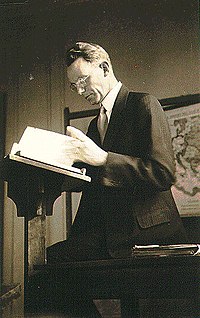


The second tradition in the presuppositional school comes from Dr. Cornelius Van Til. Dr. Van Til thought of everything in terms of worldviews with presuppositions (e.g. Kuyper). But also acknowledged, as the Old Princeton School per Thomas Reid, all men as image bearers of God know Him innately, but they suppress the truth in unrighteousness. The noetic effects of sin preclude man from coming to a saving knowledge of God. Moreover, man as a rebel against God views himself as autonomous (i.e. the final standard for meaning and truth). However, the noetic effects of sin does not render apologetics useless. Van Til, unlike Abraham Kuyper, believed Christians have an ultimate proof of Christianity at its disposal—the transcendental argument for God’s existence. The first step to this approach is to deny religious neutrality and human autonomy. There is no middle ground between worldviews. A person is either committed to Christ or Satan. One either affirms Christianity or a token of the Non-Christian type. Furthermore only God, as described in Scripture, is the ultimate standard of meaning and truth. Here is where Dr. Van Till’s brilliance shined. Dr. Van Til argued that if the non-Christian is epistemically self-conscious (of his spurious human autonomy), he would be confronted with the necessity of the Christian presupposition, namely, only God, as described in Scripture, is the ultimate authority and source of meaning and truth.

The Christian should not argue for Christianity merely by empiricism, rationalism or existentialism; rather the Christian argues for the truth of Christianity transcendentally. He argues that the Christian worldview is the transcendental precondition for human thought and experience. Thus the Christian worldview is necessary to bring unity and completeness to the divided perspectives of empiricism (situational), rationalism (normative) or existentialism (subjective). 

In modern vernacular, unless the Christian worldview is true one cannot prove anything. The argument is formulated loosely by confronting non-Christians to make sense of knowledge, rationality, induction, freedom and morals all the while assuming human autonomy. Dr. Van Til called this arguing from the impossibility of the contrary (much like in Geometry the argument from contradiction). Once the presupposition of human autonomy is logically demonstrated as impossible then the Christian presupposition is offered as the only alternative to make sense of knowledge, rationality, induction, freedom and morals.

Dr. Van Til emphasized that all men have presuppositions (i.e. beliefs used to interpret evidence). Thus no one is religiously neutral to be able to follow the evidence whereever it leads. A person is either committed to Christ or Satan. In the context of truth and meaning, one is either committed to autonomy (self-law) or theonomy (God’s-law). The Christian proves his presupposition transcendentally.   He argues from the impossibility of the contrary (i.e. unless the Christian worldview is true one cannot prove anything).

Van Til was not opposed to reason. He viewed reason as a tool of God. Van Till understood reason as derivative from God. God, who is essentially and originally rational, created man rational after His image. God gave truth and meaning to the actual world. He was the ultimate standard for meaning and truth, which included proper interpretation of the actual state of affairs. However, after the fall, man exchanged the creator for the creature and became vain in his reasoning. Man placed himself on the throne of God; he claimed the right to be essentially and originally rational.  Man asserted his reasoning as the measure/judge of all things (including God and the Bible). In effect, fallen man asserted his reasoning alone was the ontic and epistemic foundation for knowledge, rationality, induction, freedom and morals. Fallen man sees these things as human constructs with man at its source. Van Til turned this kind of reasoning on its head by arguing for a Copernican revolution in apologetics we now call covenantal or presuppositional apologetics.   

Van Til was concerned to rightly put human reason in its proper place under God’s rationality, authority, control, presence and power. Such a task is accomplished when we argue transcendentally.

Dr. John Frame rightly shatters the criticism that presuppositionalism merely argues in a circle. First, Frame points out the logical order of a Biblical epistemology can be conceived as linear (e.g. God’s rationality ->; human faith -->; human reasoning). In God’s rational providence, He produces human faith that governs human reasoning. All three of these components are inseparable. One cannot reason without faith (in reason); and one cannot justify either faith or reason without God.

Synthesis

Scholars (e.g. Carnell, Reymond, Nash, Frame) have examined their apologetical contributions and  identify weaknesses and strengths to provide a synthesis of the best their systems offered.  


Wednesday, November 27, 2013

Carrier and the Universe


Dr. Carrier writes (taken from his site here):


(1) • What caused the universe to exist?
Fallacy of loaded question. It is not established that the universe began, and thus had a cause at all.
Our universe began (at the Big Bang) but we have no way of knowing anymore what if anything preceded that event. And as for what caused our one specific universe, we already know the answer to that: the Big Bang did (an event and process that completely eluded all divine Christian revelation for two thousand years, as well as all divine Muslim and Jewish revelation throughout the whole of their existence). As to what caused the Big Bang, we have many viable theories (from Hawking’s The Grand Design to Krauss’ A Universe from Nothing to Vilenkin’s Many Worlds in One, all of which predict and explain numerous strange and often specific features of the universe that no theology has ever been able to deduce from the hypothesis that God did it). As far as figuring out which one is right, cosmological scientists are working on it. They’ve made tremendous progress. Theology has made none.
If we revise the question to ask something more abstract like “Why does the universe exist?” (thus admitting that maybe it has always existed in some form, and thus was never ultimately “caused,” but asking instead “why” it exists instead of something else, or nothing at all), then the answer is the same as why a god is supposed to exist. (He just does? Then the universe just does. He exists necessarily? Then a universe exists necessarily. We can play this game forever.) If we revise the question into something conditional like, “If all existence itself began, then what caused it?,” then the answer is any of dozens of possible things, all of which have a vastly lower specified complexity than a complex intelligent mind and therefore have a far greater prior probability (see The God Impossible)–and by explaining observed evidence better, they also have a far greater posterior probability as well. This follows from the argument from scale, including the mind-boggling scale of this universe’s lethality and inhospitability to life (indeed the universe is far better designed to generate black holes than life).
I discuss all these facts throughout my entries in the Carrier-Wanchick Debate. I have more recently described ten possible causal or explanatory theories of why an orderly universe exists in previous comments on my blog (and we needn’t know which are true to know they are all simpler theories, and often based in more background evidence, than any god hypothesis). I more formally outline why the evidence (the nature of the universe we find ourselves in) is far more likely on any such godless hypothesis than on any rational form of theism in my chapter “Neither Life Nor the Universe Appear Intelligently Designed” in The End of Christianity (pp. 279-304). I’ll quote one key section of that to give you an idea of what I mean:
[T]his universe is 99.99999 percent composed of lethal radiation-filled vacuum, and 99.99999 percent of all the material in the universe comprises stars and black holes on which nothing can ever live, and 99.99999 percent of all other material in the universe (all planets, moons, clouds, asteroids) is barren of life or even outright inhospitable to life. In other words, the universe we observe is extraordinarily inhospitable to life. Even what tiny inconsequential bits of it are at all hospitable are extremely inefficient at producing life—at all, but far more so intelligent life …. One way or another, a universe perfectly designed for life would easily, readily, and abundantly produce and sustain life. Most of the contents of that universe would be conducive to life or benefit life. Yet that’s not what we see. Instead, almost the entire universe is lethal to life—in fact, if we put all the lethal vacuum of outer space swamped with deadly radiation into an area the size of a house, you would never find the comparably microscopic speck of area that sustains life (it would literally be smaller than a single proton). It’s exceedingly difficult to imagine a universe less conducive to life than that—indeed, that’s about as close to being completely incapable of producing life as any random universe can be expected to be, other than of course being completely incapable of producing life. (pp. 295-96)
And yet…
That is exactly what we would have to see if life arose by accident. Because life can arise by accident only in a universe that large and old. The fact that we observe exactly what the theory of accidental origin requires and predicts is evidence that our theory is correct. (p. 290)
Because without a God, life can only exist by chemical accident, such a chemical accident will be exceedingly rare, and exceedingly rare things only commonly happen in vast universes where countless tries are made over vast spans of time. Likewise, a universe not designed for us will not look well suited to us but be almost entirely unsuited to us and we will survive only in a few tiny chance pockets of survivable space in it. Atheism thus predicts, with near 100% certainly, several bizarre features of the universe (it’s vast size and age and lethality to life), whereas we cannot deduce any of those features from any non-gerrymandered God hypothesis (while gerrymandered hypotheses all grossly violate Occam’s Razor).

My Reply
            Dr. Carrier is quite mistaken to say, “Our universe began (at the Big Bang) but we have no way of knowing anymore what if anything preceded that event” since he would have to know the limits of knowledge to make such a claim. In which case, Dr. Carrier would be inconsistent claiming to know what cannot be known.

Dr. Carrier tells us,

“As to what caused the Big Bang, we have many viable theories (from Hawking’s The Grand Design to Krauss’ A Universe from Nothing to Vilenkin’s Many Worlds in One, all of which predict and explain numerous strange and often specific features of the universe that no theology has ever been able to deduce from the hypothesis that God did it). As far as figuring out which one is right, cosmological scientists are working on it. They’ve made tremendous progress. Theology has made none.”

         It is strange how Dr. Carrier doesn’t explain in what ways these alternative theories can evade the absolute beginning of the universe. Perhaps it is because they, in fact, cannot. All of the models, he mentions, still conclude the absolute beginning of the universe. Dr. Carrier talks of the universe just existing inexplicably, which amounts to an arbitrary claim. He also discusses the possibility of the universe having necessary existence.This is obviously false since we can rationally imagine there being no universe. The universe did not have to exist. 

           Moreover, the theology and tone, Dr. Carrier wishes to criticize as “the hypothesis that God did it” is a naive understanding of Christian theology and philosophy. It is naive as if one characterized the metaphysical naturalism of Dr. Carrier as "the hypothesis that nature did it." But is God to be treated as merely a hypothesis? As Christians we understand all things are created and sustained by God’s direct providence.  So in this sense all things can be explain by God; but that taken by itself, especially for Christian scientists, can be somewhat trivial. This is why science focuses on God’s indirect providence with God’s direct providence as its foundation. That is to say science graphs the interactions and relations between secondary causes with the necessary assumption of God as the primary cause. Sound Christian theology and philosophy does not start with God as merely a hypothesis, but as a necessary prerequisite for even hypothesizing. There is a significant difference between the two. The former starts with God as a hypothesis to make experiments and predictions to confirm or falsify God. The latter starts with God as a presupposition necessary to even account for hypothesizes, experiments, predictions, confirmations, or falsifications. I sense, here, Dr. Carrier would say both views amount merely to the arbitrary claim, namely “God did it.” But Christians’ are certainly not making an arbitrary claim. Quite the contrary, Christians are arguing the very fact that arbitrariness is a key intellectual sin is due to God being the starting-point. God, who himself is rational, created us to reflect His nature. Since we are made in His image to be rational, we (have a reason to) object to arbitrariness. The very charge of arbitrariness, Dr. Carrier wishes to pin on Christianity, exposes the fact he is made in the image of God. Is the Christian claim arbitrary though? It must be a resounding no! Christianity as a worldview is coherent and self-justifying. The problem is naturalists preclude Christianity from being true simply on the basis of their faith in metaphysical naturalism. Still it is worth asking, why is an arbitrary answer insufficient for Dr. Carrier? Why isn’t an arbitrary answer preferred over a rational one? I bet he’d answer along the lines that a person ought to have reasons for what she believes. A person has the epistemic responsibility to acquire reasons to form beliefs. If he would say these things no appeal to natural selection can explain where these rational obligations and responsibilities come from.  
        Dr. Carrier uses probability theory to say certain theories make it more probable that the universe would arise from nothing by nothing in the way it exists presently. Yet he neglects to mention the highly unreliable nature of probability theory given the background information needed to accurately represent and calculate any given thing. 

He talks a lot about order which cannot be rightly accounted for given the requirement of chance to explain the universe from metaphysical naturalism. 

Why Dr. Carrier quibbles about sticking to Ockam’s razor is nonsense from naturalism.

For a different take on some of the same issues discussed here check out my posts here and here

Tuesday, May 21, 2013

God, why is there evil?

Many Christians and non-Christians alike are troubled by evil in the world. For the former it is a testimony of God's mercy and sovereignty. But for the latter it is viewed as supposedly a disproof of God's existence.

The problem can be stated in different ways but in the end it reduces to questioning God's reasons for providentially planning and sustaining the existence of evil. The question why does God allow evil and suffering in the world, I think is a difficult question. Here are some plausible answers:

1. God has a morally sufficient reason for why he allows evil to exist. To argue he doesn't cannot be shown by limited human knowledge.
2. It is for a greater good. We do not see the big picture of all the events that occur but God is orchestrating them for ultimate good. For example, Jesus died by the hands of wicked men so those that repent and trust in Him may have everlasting life.
3. God created laws of nature. If God intervened every time evil or suffering occurred what would stop people from demanding God to intervene for everything at every time? It doesn't sound like atheists want evil and suffering to stop, it sounds like they want heaven on earth.
4. God uses evil and suffering to build our character.
5. God gave humans originally the freedom of choice. God did not force Adam and Eve to love and obey him. He gave them the ability to choose good or evil.
 6. If God removed evil from the world, like rape, God to be fair would be obligated to punish not just some but all evil and suffering. Everyone would cease to exist because all evil and suffering is the results of sin. Everyone is guilty not innocent so all would cease to exist if God chose to destroy evil now instead of deal with it through the cross of Christ.
7. God created all things, rules all things, controls all things, and owns all things. This means God has the right to do whatever he wants with his property (i.e. creation). Or as Romans 9 puts it, the potter has power over the clay to do whatever he wills with it.

 Ultimately I think it all comes down to what we put our trust in. Are we going to trust God’s infinite knowledge and wisdom or man’s limited knowledge?
 Miscellaneous Videos Dealing with Evil from various Theological Traditions:
Gregory E. Ganssle


Voddie Baucham


Tim Keller


The Free will Defense


What is Evil?
\

The Problem of Suffering and Evil. William Lane Craig (Part 1, 2 and 3)


JP Moreland Q&A

Timothy Keller

 Alvin Plantinga


Greg Koukl

Richard Swinburne          

Ravi Zacharias 

Bruce Little


Resources 

William Downing. The Problem of Evil. HERE


John Byl. God, Chance and Evil. HERE 

Greg Bahnsen. The Problem of Evil. Covenant Media Foundation. HERE


Greg Koukl. The Strength of God and the Problem of Evil. Stand To Reason.HERE and HERE

Scott K. Oliphint. HERE

E. Calvin Beisner. The Potter’s Freedom. HERE

John Frame HERE

Greg Welty HERE

Cornelius Van Til HERE

Vincent Cheung HERE


Bruce Little. Evil and The God Who Knows HERE

William M. Schweitzer, Rethinking the 'Problem of Evil' in The Banner Of Truth Magazine, May 2013, Issue 596 (Banner Trust: Edinburgh, 2013)p.25.

Czapkay Suddeth, Michael. Absolute Predestination and Divine Permission.1989. p.p.66-75.

Paul Copan. "If God's Creation Was 'Very Good', How Could Evil Arise?"
http://enrichmentjournal.ag.org/201301/201301_024_good_creation.cfm